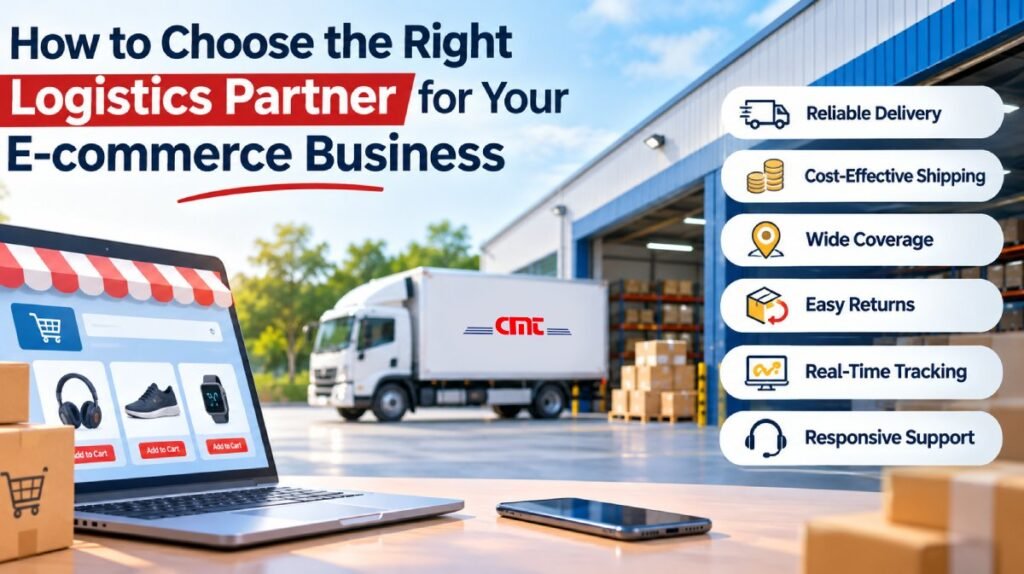
The success of an e-commerce business depends on more than just selling quality products. Fast deliveries, reliable shipping, accurate order tracking, and hassle-free returns all play an important role in customer satisfaction.
As online shopping continues to grow, managing deliveries efficiently has become a major challenge for e-commerce businesses. Delayed shipments, high transportation costs, poor tracking, and failed deliveries can affect both profitability and customer trust.
This is why choosing the right logistics partner is essential.
A professional logistics partner helps streamline order fulfillment, manage transportation, improve delivery performance, and support business growth.
Here are the key factors to consider when selecting a logistics partner for your e-commerce business.
Delivery reliability should be your first priority.
Customers expect their orders to arrive safely and within the promised delivery timeframe. Frequent delays, damaged products, or lost shipments can lead to negative reviews and reduced customer loyalty.
Before selecting a logistics provider, evaluate:
On-time delivery performance
Shipment handling procedures
Delivery success rates
Experience with e-commerce shipments
Process for managing delayed or damaged orders
Choose a logistics partner with consistent service quality and a proven ability to handle deliveries efficiently.
Shipping costs directly affect your e-commerce profit margins.
However, choosing the cheapest logistics provider is not always the best decision. Low shipping rates may come with hidden charges or poor delivery performance.
Compare pricing based on:
Shipping rates by weight and location
COD (Cash on Delivery) charges
Reverse logistics charges
Fuel and handling fees
Remote-area delivery charges
Return-to-origin costs
Look for transparent pricing that helps you manage shipping expenses without compromising service quality.
Your logistics partner should be able to deliver products to the locations where your customers are based.
Whether you serve customers in major cities, smaller towns, or remote areas, delivery coverage plays an important role in expanding your business.
Check whether the provider offers:
Local and regional delivery
Pan-India shipping
Remote-area delivery
Express delivery options
International shipping, if required
A wider delivery network allows your e-commerce business to reach more customers and explore new markets.
Customers want to know where their orders are and when they will arrive.
A good logistics partner should provide a tracking system that allows businesses and customers to monitor shipments throughout the delivery process.
Important tracking features include:
Real-time shipment updates
Automated SMS and email notifications
Estimated delivery dates
Out-for-delivery notifications
Digital proof of delivery
Delivery exception alerts
Better tracking reduces customer inquiries, improves transparency, and creates a more reliable shopping experience.
Cash on Delivery remains an important payment option for many Indian e-commerce businesses.
However, managing COD shipments requires proper coordination and timely payment reconciliation.
Before choosing a logistics partner, understand:
COD availability
COD remittance timelines
Payment reconciliation process
Failed delivery management
Return-to-origin handling
A reliable COD management process can improve cash flow visibility and reduce unnecessary operational complications.
Product returns are a normal part of e-commerce operations.
A complicated return process can increase operational costs and negatively affect customer satisfaction.
Choose a logistics provider that offers efficient reverse logistics services, including:
Easy return pickup scheduling
Return shipment tracking
Exchange delivery management
Return-to-origin handling
Timely return processing
An efficient returns process helps businesses manage returned products while maintaining a positive customer experience.
Modern e-commerce logistics depends heavily on technology.
Your logistics partner should offer digital tools that simplify order processing, shipment management, and customer communication.
Look for features such as:
Automated order booking
API integration
Shipment management dashboards
Inventory synchronization
Automated tracking notifications
Digital proof of delivery
Performance reports
Integration with platforms such as Shopify, WooCommerce, or your existing order management system can reduce manual work and improve operational efficiency.
Even with efficient logistics operations, delivery problems can occasionally occur.
You need a logistics partner that responds quickly and provides effective solutions when shipments are delayed, damaged, or incorrectly delivered.
Evaluate their:
Customer support availability
Response times
Issue-resolution process
Dedicated account management
Escalation procedures
Reliable support helps your business resolve shipment-related issues before they affect customer relationships.
Your shipping requirements will change as your e-commerce business grows.
A logistics provider that can handle 100 orders per month should also have the capability to support significantly higher shipment volumes.
Consider whether the provider can manage:
Increasing order volumes
Seasonal sales and promotional campaigns
Multiple delivery locations
Faster delivery requirements
Warehousing and fulfillment needs
Choosing a scalable logistics partner helps you expand your business without constantly changing service providers.
Choosing the right logistics partner is an important decision for every e-commerce business.
A reliable provider can help reduce shipping costs, improve delivery performance, simplify returns, and create a better customer experience.
Don’t make your decision based on shipping rates alone. Consider the complete logistics operation, including delivery coverage, tracking technology, COD management, customer support, and scalability.
The right logistics partner doesn’t just deliver products. It helps deliver customer satisfaction, business efficiency, and long-term growth.
Whether you are a growing online store or an established e-commerce brand, efficient logistics can help you manage orders, improve deliveries, and serve customers better.
Connect with our team to discuss your shipping and transportation requirements and find logistics solutions that support your business growth.


Chamba Manali Transport Co.(Regd), for the past 25 years, we have consistently enabled smooth logistics for businesses across India